Senior Consultant & Interventional Cardiologist
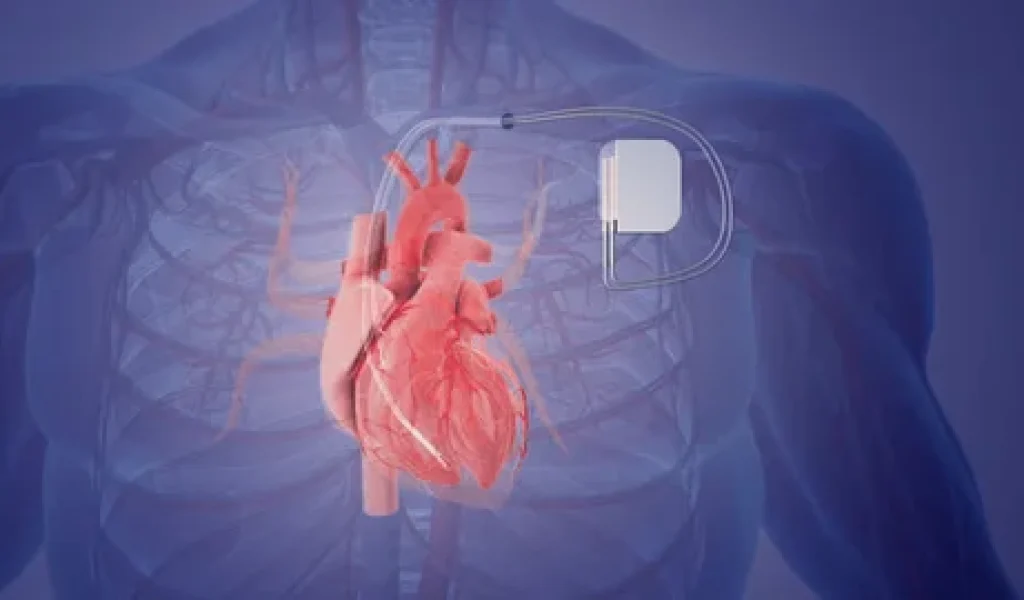
Pacemaker implantation is a safe and effective cardiac procedure performed to treat abnormal heart rhythms, particularly when the heart beats too slowly or irregularly. A pacemaker is a small electronic device placed beneath the skin, usually near the collarbone, with thin wires that extend to the heart. The device continuously monitors the heart’s rhythm and delivers gentle electrical impulses whenever needed to maintain a normal heartbeat. Modern pacemakers are highly advanced, offering customized pacing based on the patient’s activity level and heart condition.
Dr. Sagar Chandrashekhar Bhuyar provides comprehensive evaluation and expert pacemaker implantation using advanced techniques to ensure optimal patient safety and long-term heart health. The procedure significantly improves symptoms, enhances quality of life, and reduces the risk of complications associated with untreated rhythm disorders.
Pacemaker implantation is recommended when the heart’s natural electrical system does not function properly. This can occur due to age-related degeneration of the heart’s conduction pathways, sick sinus syndrome, complete or partial heart block, or certain congenital heart conditions. Patients who have experienced heart attacks, undergone heart valve surgery, or suffer from cardiomyopathy may also develop electrical conduction abnormalities requiring pacemaker support.
Certain medications used to treat heart disease may slow the heart rate excessively, making pacemaker implantation necessary. In some individuals, genetic factors or chronic medical conditions affecting the heart’s electrical activity can also contribute to the need for permanent pacing.
Patients requiring a pacemaker often experience symptoms caused by an inadequate heart rate or disrupted electrical signals. Common symptoms include persistent fatigue, dizziness, lightheadedness, fainting or near-fainting episodes, unexplained weakness, shortness of breath during routine activities, chest discomfort, and reduced exercise tolerance. Some individuals may notice palpitations or periods where the heartbeat feels unusually slow or irregular.
These symptoms may develop gradually or occur suddenly and should never be ignored, particularly if they interfere with daily activities or are associated with loss of consciousness.
A thorough cardiac evaluation is essential before recommending pacemaker implantation. The diagnostic process begins with a detailed medical history, physical examination, and assessment of symptoms. Electrocardiography (ECG) is commonly performed to identify rhythm abnormalities, while Holter monitoring or event recorders help detect intermittent irregular heart rhythms over an extended period.
Additional investigations such as echocardiography, exercise stress testing, blood investigations, and electrophysiological studies may be advised depending on the patient’s condition. These tests help determine the exact cause of the rhythm disturbance and ensure that pacemaker implantation is the most appropriate treatment option.
Pacemaker implantation is performed under local anesthesia with mild sedation in a specialized cardiac catheterization laboratory or operating room. During the procedure, the pacemaker generator is placed beneath the skin, and one or more leads are carefully guided through a vein into the heart under imaging guidance. Once positioned correctly, the leads are connected to the pacemaker, which is programmed according to the patient’s individual cardiac needs.
Depending on the underlying heart condition, patients may receive a single-chamber, dual-chamber, or biventricular pacemaker. In addition to device implantation, medications and treatment of associated heart conditions continue to play an important role in achieving the best long-term outcomes.
Recovery after pacemaker implantation is generally quick, with most patients returning home within one or two days. Mild soreness around the implantation site is common during the initial recovery period. Patients are advised to avoid lifting heavy objects or raising the arm on the affected side above shoulder level for several weeks to allow proper healing of the leads.
Regular follow-up appointments are important to monitor the pacemaker’s function, assess battery life, and adjust settings if necessary. Maintaining a heart-healthy lifestyle, taking prescribed medications, controlling blood pressure and diabetes, and attending scheduled cardiac evaluations contribute to long-term success and improved cardiovascular health.
Pacemaker implantation is considered a highly successful and low-risk procedure when performed by experienced cardiac specialists. However, as with any medical procedure, certain complications may occur. These can include bleeding, infection at the implantation site, bruising, lead displacement, damage to nearby blood vessels, allergic reactions to medications, or, in rare cases, lung collapse during lead placement.
Long-term complications are uncommon, and regular follow-up allows early detection and management of any device-related issues. Prompt medical attention for unusual symptoms helps ensure continued safe and effective pacemaker function.
Medical evaluation should be sought if you experience recurrent fainting, unexplained dizziness, persistent fatigue, slow heartbeat, shortness of breath, chest discomfort, or episodes of palpitations. Individuals who have been diagnosed with heart block, sick sinus syndrome, or other rhythm disorders should consult a cardiologist without delay to determine whether pacemaker implantation is appropriate.
Patients who already have a pacemaker should seek immediate medical care if they develop swelling, redness, pain, discharge at the implantation site, persistent fever, frequent dizziness, or symptoms suggesting that the device is not functioning properly. Early diagnosis and timely treatment play a vital role in preventing serious complications and maintaining a healthy, active life.
Patients choose Dr. Sagar Chandrashekhar Bhuyar as their Consultant Interventional Cardiologist in Secunderabad for his combination of over 20 years of hands-on interventional experience, board certification (MBBS, MD, DNB – Cardiology), international fellowships (FACC, FESC), and an academic role that keeps his practice aligned with current cardiology research.
From preventive cardiology and cardiac imaging to complex coronary interventions, Dr. Bhuyar provides comprehensive heart care tailored to each patient's needs. His expertise includes Angiography, Angioplasty (PCI), Pacemaker Implantation, Peripheral Interventions, Balloon Valvoplasty, and Echocardiography.
Copyright © 2026 Dr. Sagar Chandrashekhar Bhuyar. All Rights Reserved.
WhatsApp us