

Heart-related conditions are among the leading health concerns worldwide, and early diagnosis and timely treatment can make a significant difference in patient outcomes. When people experience symptoms such as chest pain, shortness of breath, or signs of a heart attack, they often hear the terms coronary angiography and angioplasty. Although these procedures are closely related, they serve entirely different purposes.
As an Associate Professor & Senior Interventional Cardiologist, providing advanced cardiac care involves accurately diagnosing heart disease and offering the most appropriate treatment to restore healthy blood flow. Understanding the difference between coronary angiography and angioplasty helps patients make informed decisions and reduces anxiety before undergoing these procedures.
What Is Coronary Angiography?
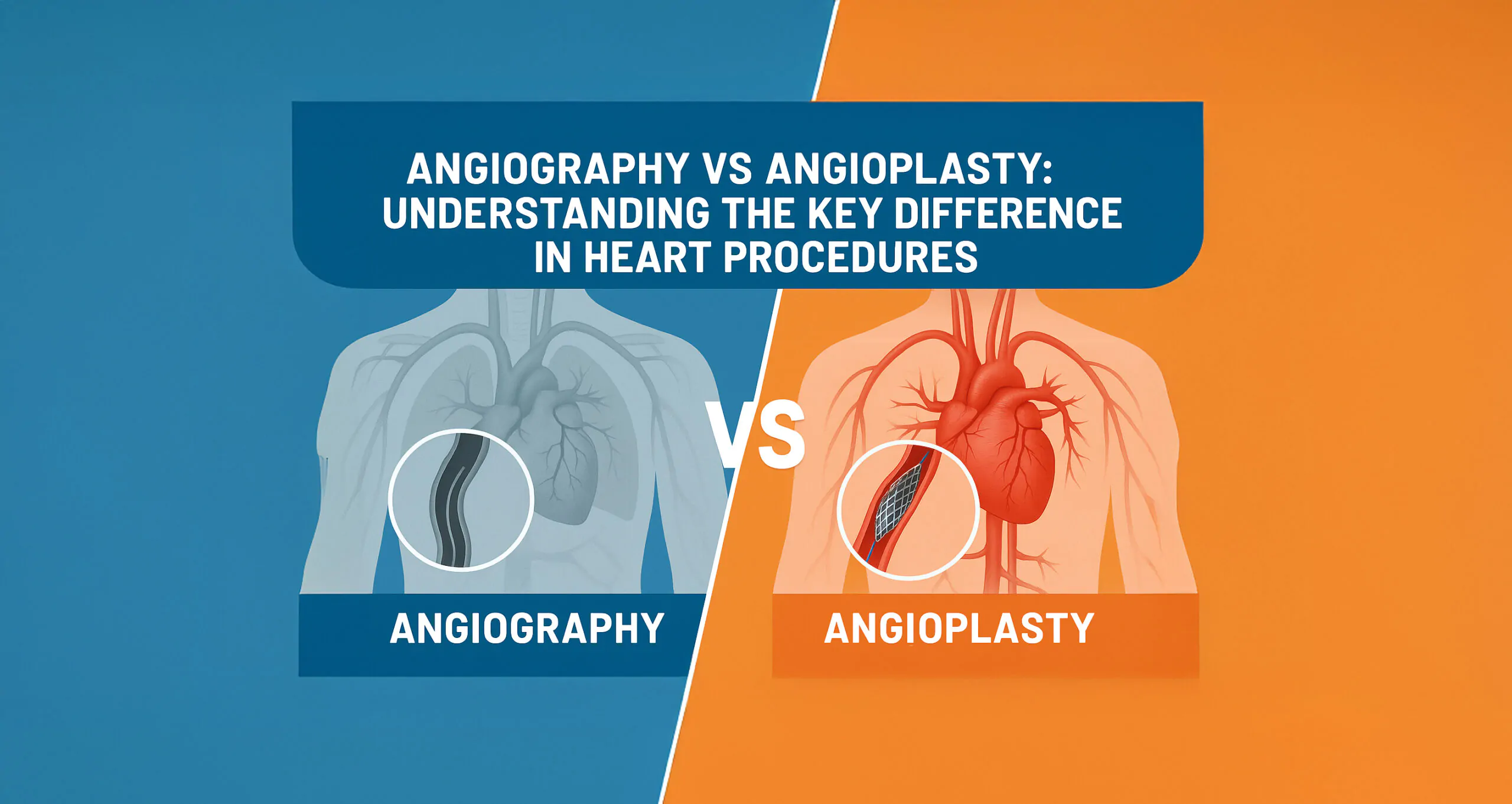
Coronary angiography is a diagnostic procedure used to examine the coronary arteries, which supply oxygen-rich blood to the heart muscle. It helps identify whether these arteries are narrowed, blocked, or damaged.
During the procedure, a thin catheter is inserted through an artery in the wrist or groin and carefully guided to the heart. A special contrast dye is then injected into the coronary arteries while X-ray images are captured in real time. These images allow the cardiologist to visualize blood flow and accurately detect blockages or abnormalities.
Coronary angiography itself does not treat blocked arteries. Instead, it provides detailed information that helps determine whether medication, angioplasty, or bypass surgery is the most suitable treatment option.
What Is Coronary Angioplasty?
Coronary angioplasty, also known as Percutaneous Coronary Intervention (PCI), is a minimally invasive treatment procedure performed to open narrowed or blocked coronary arteries.
During angioplasty, the cardiologist inserts a catheter with a small balloon at its tip into the affected artery. Once positioned at the blockage, the balloon is inflated to widen the artery and improve blood flow. In most cases, a stent (a small metal mesh tube) is placed to keep the artery open and reduce the risk of future narrowing.
Angioplasty restores blood circulation to the heart muscle, relieves symptoms such as chest pain, and significantly reduces heart damage during a heart attack when performed promptly.
When Is Coronary Angiography Recommended?
A cardiologist may recommend coronary angiography if a patient has:
- Persistent or severe chest pain (angina)
- Positive stress test indicating reduced blood supply to the heart
- Suspected coronary artery disease
- Symptoms suggestive of a heart attack
- Shortness of breath associated with heart disease
- Abnormal ECG or echocardiogram findings
- High-risk cardiovascular conditions
- Evaluation before certain heart surgeries
The procedure provides a clear roadmap of the coronary arteries, enabling precise treatment planning.
When Is Angioplasty Needed?
Angioplasty may be recommended when angiography reveals significant narrowing or blockage of one or more coronary arteries. It is commonly performed in patients with:
- Acute heart attack (STEMI or NSTEMI)
- Severe coronary artery disease
- Unstable angina
- Persistent chest pain despite medications
- Reduced blood flow affecting heart function
- Significant blockage causing symptoms during physical activity
In emergency heart attacks, angioplasty can be life-saving by restoring blood flow before permanent damage occurs.
Can Angiography and Angioplasty Be Performed Together?
Yes. In many cases, angioplasty is performed immediately after coronary angiography if a significant blockage is identified and the patient’s condition is suitable.
This approach offers several advantages:
- Faster treatment
- Reduced hospital stay
- Avoids the need for a second procedure
- Earlier symptom relief
- Lower risk of complications from delayed treatment
The decision depends on the severity of the blockage, the patient’s overall health, and clinical findings.
How Are These Procedures Performed?
Both procedures are usually carried out in a specialized cardiac catheterization laboratory (Cath Lab).
The cardiologist generally:
- Administers local anesthesia at the catheter insertion site.
- Inserts a thin catheter through the wrist (radial artery) or groin (femoral artery).
- Guides the catheter to the coronary arteries using advanced imaging.
- Performs coronary angiography by injecting contrast dye.
- If necessary, proceeds with angioplasty using balloons and stents to restore blood flow.
Most patients remain awake during the procedure and experience minimal discomfort.
Recovery After Coronary Angiography
Recovery after angiography is generally quick.
Most patients:
- Go home the same day or within 24 hours.
- Resume normal activities within one or two days.
- Drink plenty of fluids to help eliminate the contrast dye.
- Follow instructions regarding medications and activity restrictions.
Minor bruising around the catheter insertion site is common and usually resolves on its own.
Recovery After Angioplasty
Recovery following angioplasty may require a slightly longer observation period.
Patients are advised to:
- Take prescribed antiplatelet medications regularly.
- Avoid heavy lifting for a few days.
- Follow a heart-healthy diet.
- Quit smoking.
- Control blood pressure, diabetes, and cholesterol.
- Attend regular follow-up appointments.
- Participate in cardiac rehabilitation if recommended.
Most individuals can return to routine activities within a few days, depending on their overall condition.
Benefits of Coronary Angiography
Coronary angiography offers several important benefits:
- Accurate diagnosis of coronary artery disease
- Detailed visualization of coronary arteries
- Helps determine the most appropriate treatment
- Minimally invasive with a low complication rate
- Enables early detection of serious heart conditions
Benefits of Coronary Angioplasty
Angioplasty provides significant therapeutic advantages, including:
- Immediate restoration of blood flow
- Relief from chest pain and other symptoms
- Reduced heart muscle damage during heart attacks
- Improved exercise capacity
- Lower risk of future cardiac complications
- Minimally invasive alternative to open-heart surgery in many patients
Are There Any Risks?
Both coronary angiography and angioplasty are considered safe when performed by experienced interventional cardiologists. However, as with any medical procedure, there are potential risks, including:
- Bleeding at the catheter insertion site
- Allergic reaction to contrast dye
- Infection
- Irregular heart rhythm
- Blood vessel injury
- Kidney problems in susceptible patients
- Rare complications such as stroke or heart attack
The cardiologist carefully evaluates each patient’s health to minimize these risks.
Lifestyle Changes After Treatment
Whether you undergo angiography or angioplasty, maintaining heart health is essential. Recommended lifestyle changes include:
- Following a balanced, heart-friendly diet
- Exercising regularly as advised by your cardiologist
- Maintaining a healthy body weight
- Stopping tobacco use completely
- Managing diabetes, blood pressure, and cholesterol
- Reducing stress through healthy coping techniques
- Taking medications exactly as prescribed
- Attending routine cardiac follow-up visits
These measures help prevent future blockages and improve long-term cardiovascular health.
Why Choose an Experienced Interventional Cardiologist?
Successful diagnosis and treatment of coronary artery disease require expertise, precision, and access to advanced cardiac technology. An experienced Associate Professor & Senior Interventional Cardiologist provides comprehensive evaluation, evidence-based treatment, and personalized care for patients with complex heart conditions.
From preventive cardiology and diagnostic angiography to emergency angioplasty and long-term cardiac management, expert care ensures the best possible outcomes while prioritizing patient safety and comfort.
Conclusion
Although coronary angiography and angioplasty are often mentioned together, they serve different purposes. Coronary angiography is a diagnostic procedure that identifies blockages in the coronary arteries, while angioplasty is a treatment that opens those blockages and restores healthy blood flow to the heart.
Recognizing the difference helps patients better understand their treatment journey and emphasizes the importance of early evaluation for symptoms such as chest pain or shortness of breath. Prompt diagnosis, timely intervention, and ongoing heart-healthy lifestyle choices are key to preventing complications and maintaining a healthy heart.